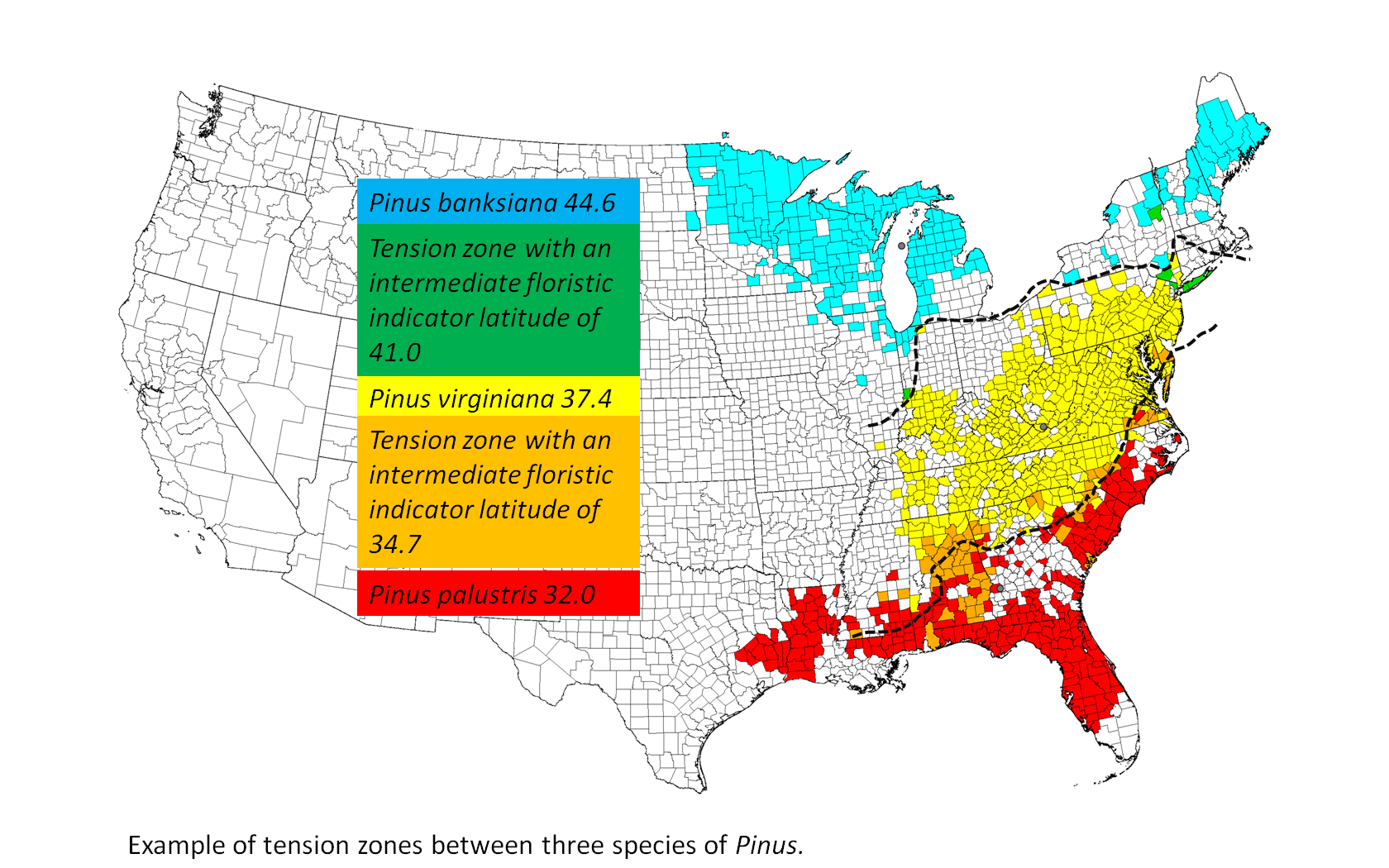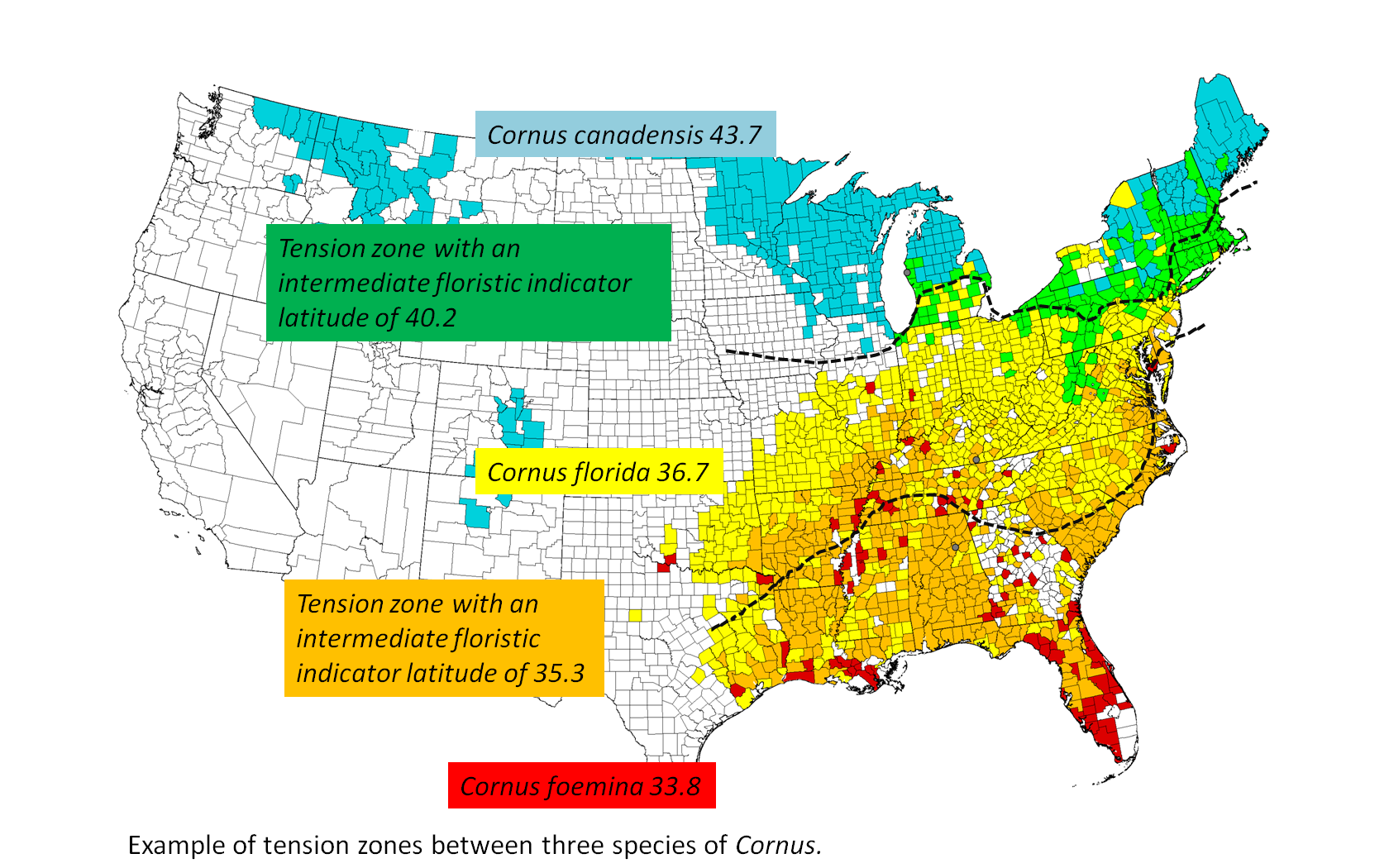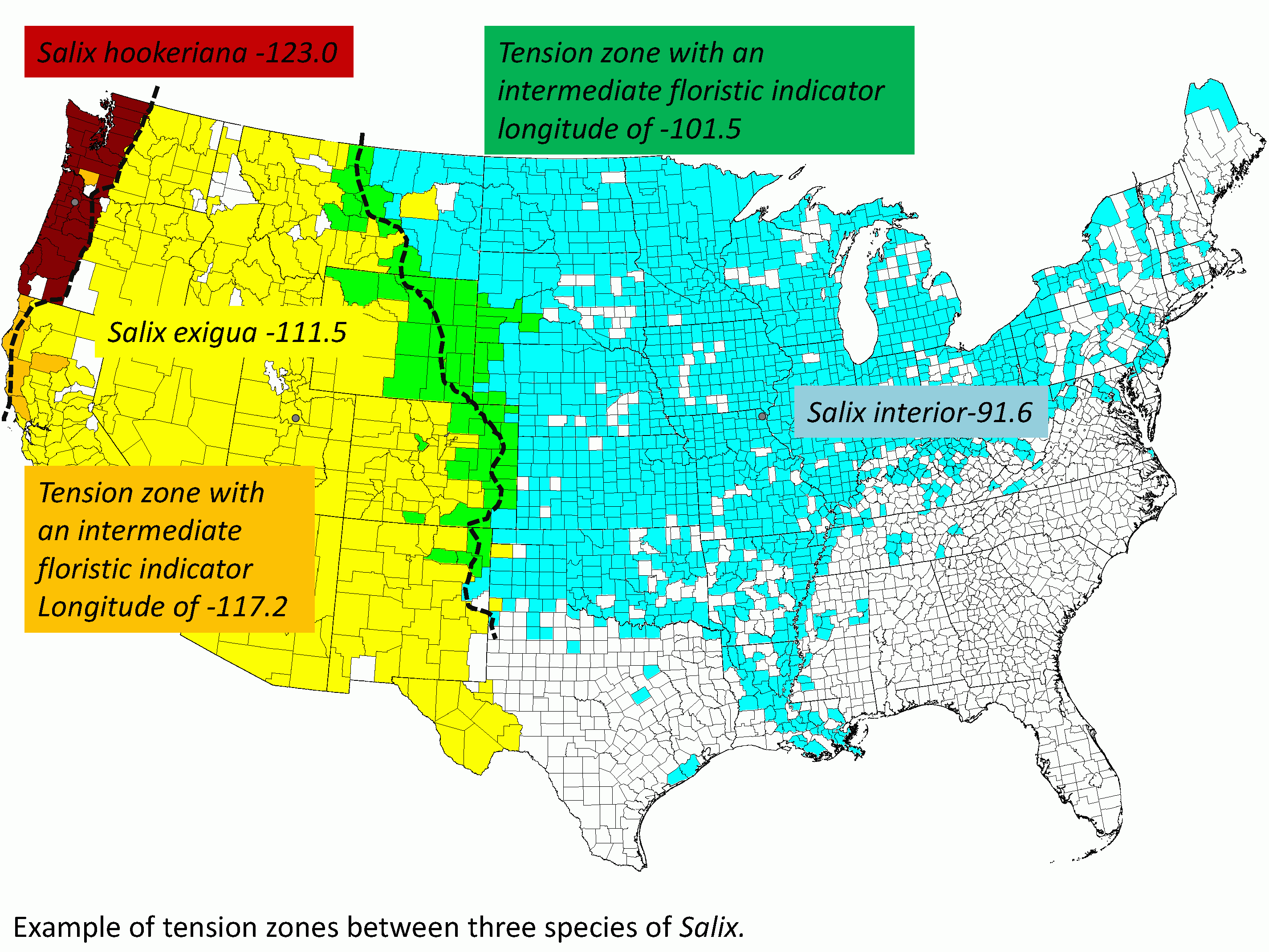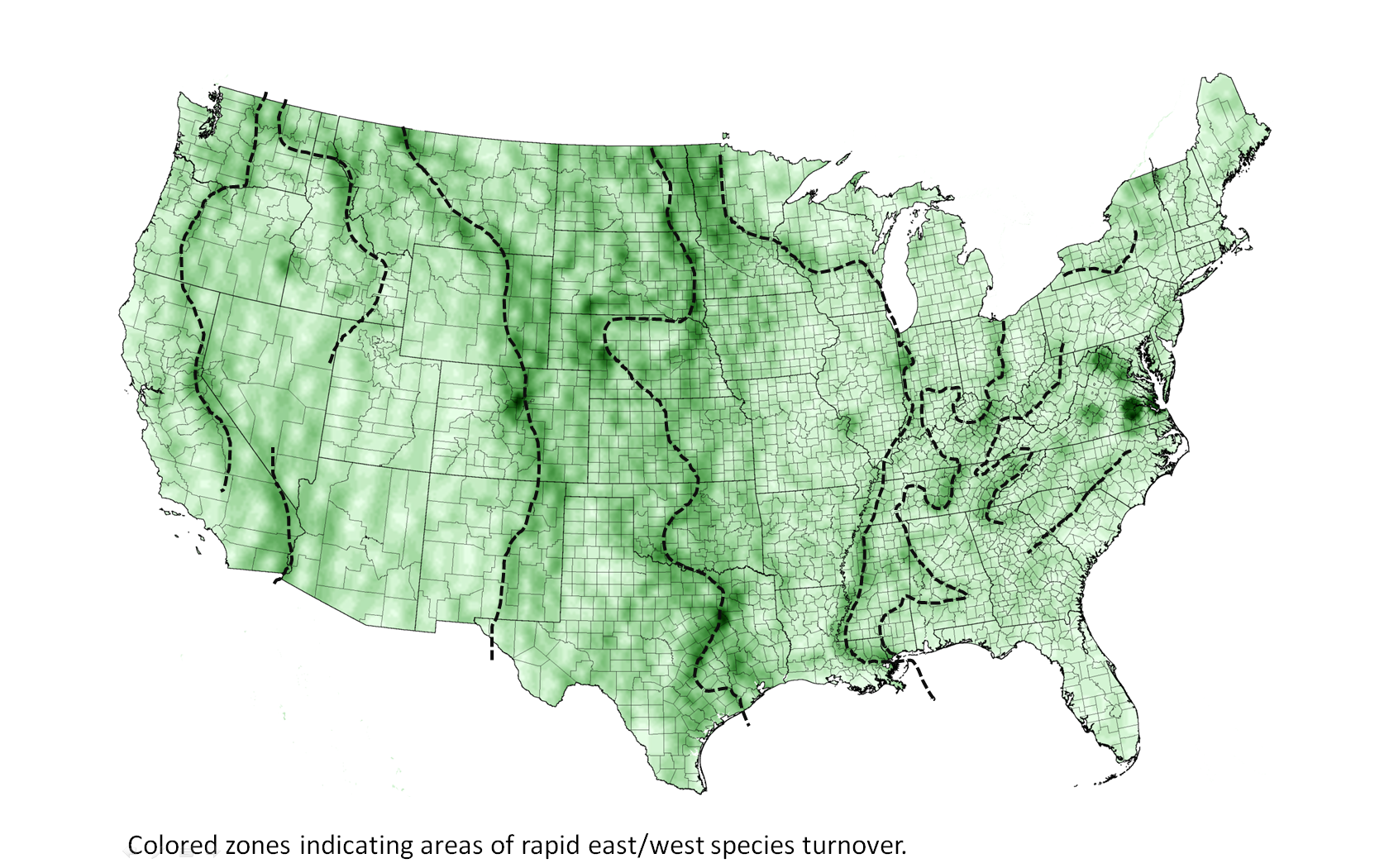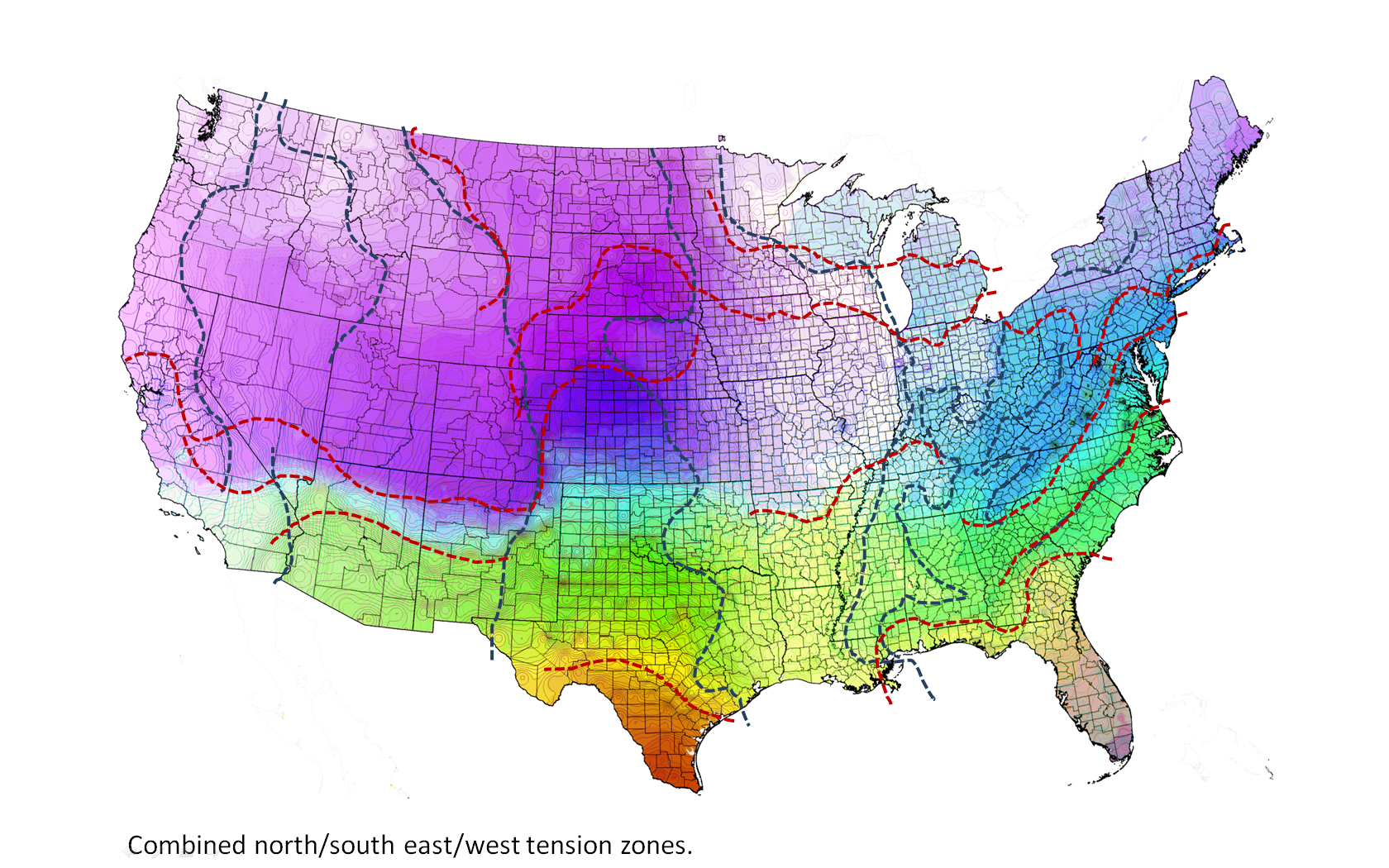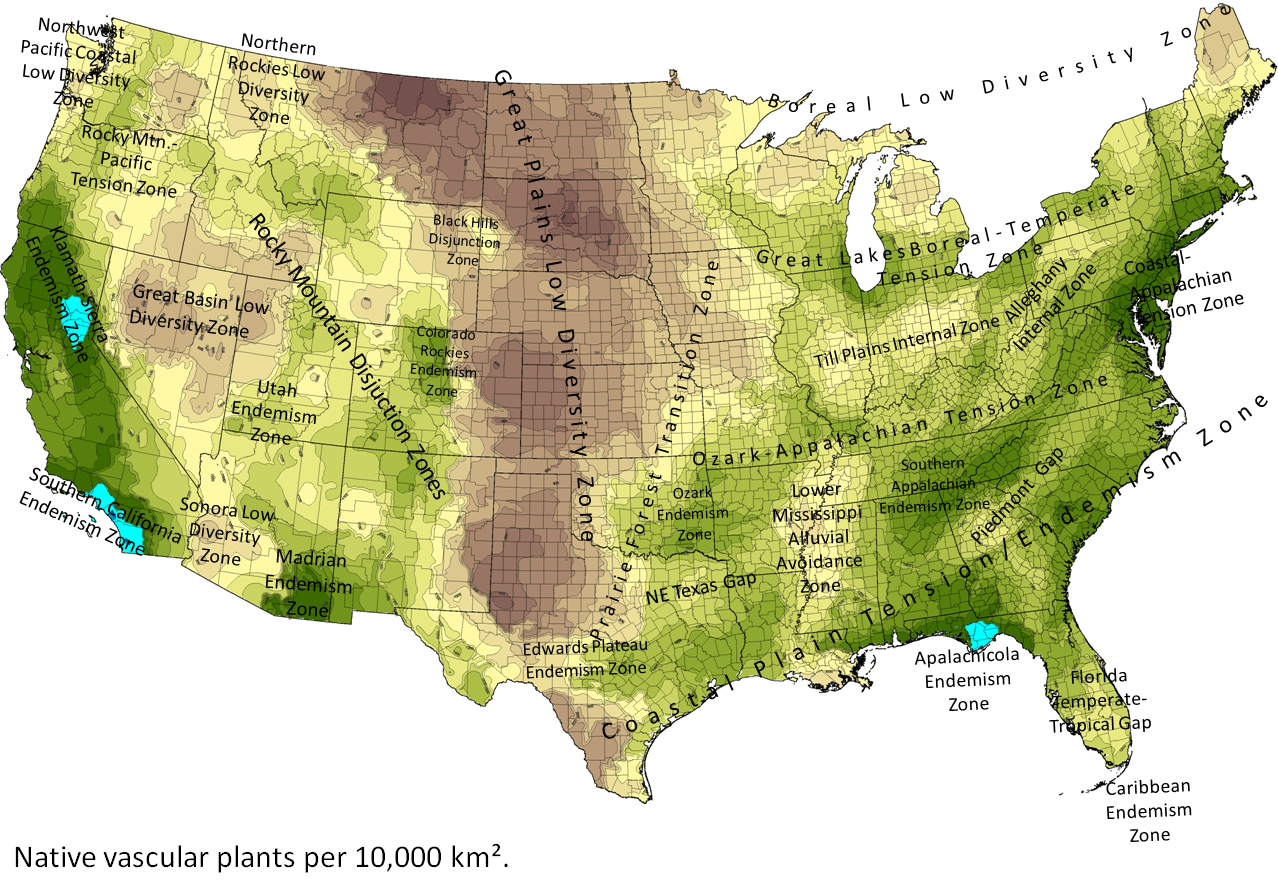
•Floristic provinces or zones are large geographic areas composed of similar plant species or plant groupings. The boundary lines seperating floristic zones are generally drawn according to obvious physiographic boundaries. However, if there are no major physiographic differences between floristic areas, boundaries may need to be set according to the actual geographic area where species composition or plant groupings change. These transitional areas are often referred to as “tension zones”. They represent phytogeogrphic areas where species or plant groupings (in some cases scores of species) achieve their maximum range limits either latitudinally or longitudinally. Such tension zones form obvious boundaries (e.g., tension zones between the northern and southern floras of the Great Lakes or the tension zone between the Piedmont and Coastal Plains of the Atlantic Coast states). Floristic tension zones in the U.S. have been historically delimited by plotting species range limits and quantifying the number of range edges crossing each U.S. county. The tension zone line is drawn through counties with the highest numbers of species.
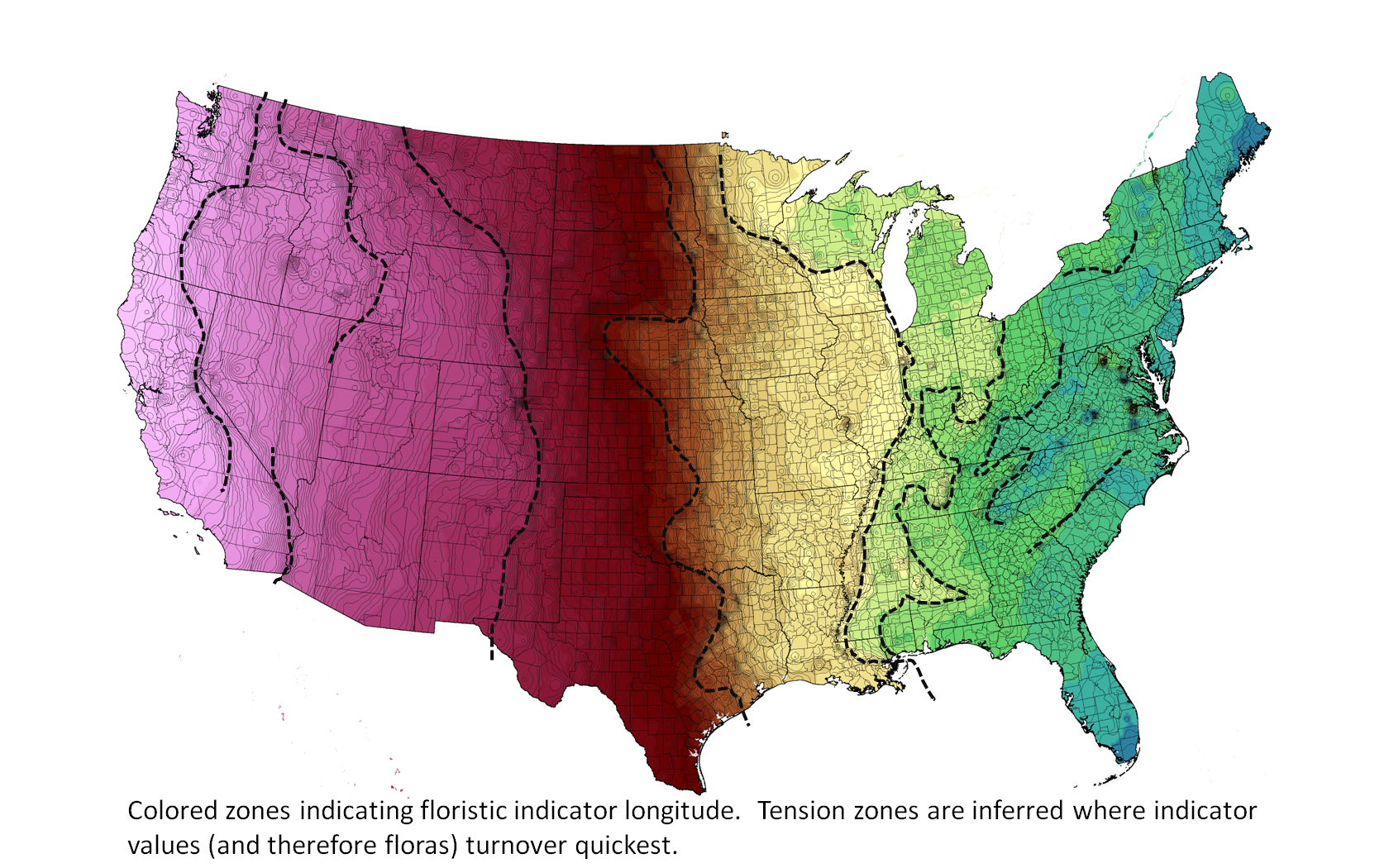
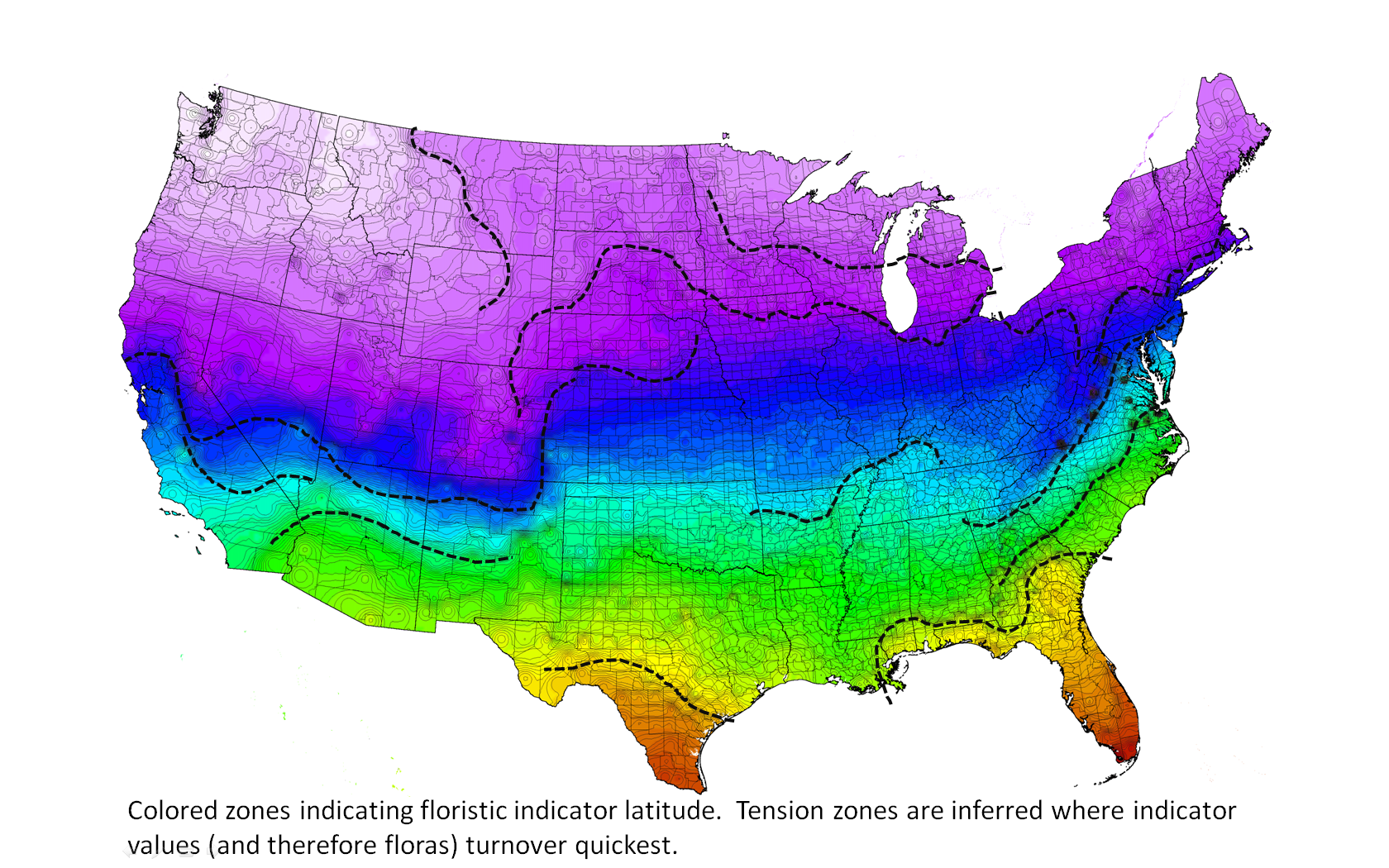
•An alternative method is to classify each species as either fundamentally northern or southern and then calculate the percent composition by northern versus southern species. However, the classification of a species’ predominant range can be arbitrary. Each species, therefore, can be given a score based on its average latitude or longitude. Each county is then given a score by averaging the latitude or longitude scores of species that occur there. As demonstrated here, widespread species are given less weight than narrowly distributed species, so that the differences between average scores are not neutralized.
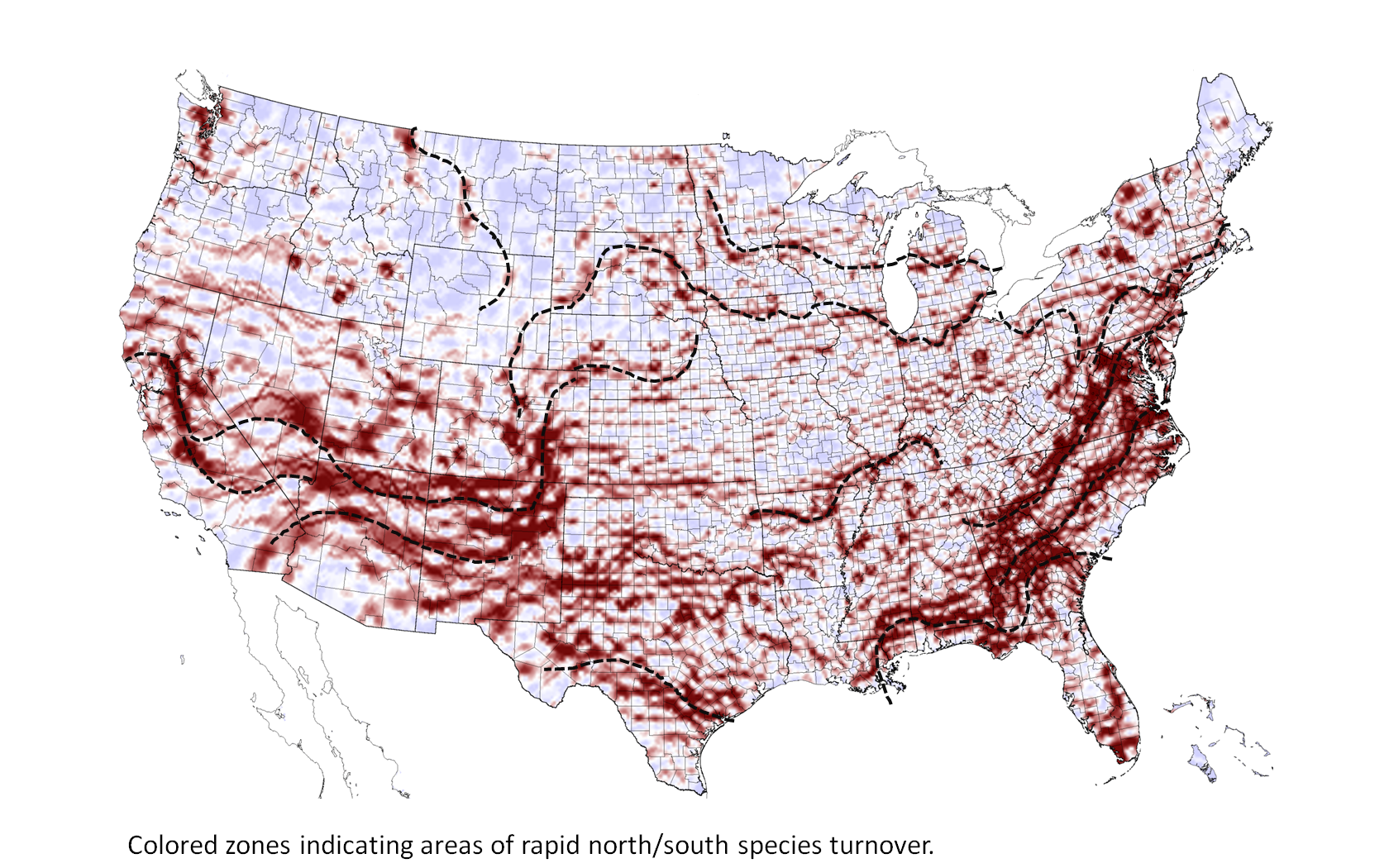
•We used latitude to determine the tension zones between northern and southern floras. We used longitude to determine the tension zones between eastern and western floras.
•When contours are plotted, the areas where the contours are close together represent tension zones between dissimilar floras (regardless of whether they are supported by a physiographic break).